
Quick answer: The costliest first import from China mistakes are approving an order without a signed sample, paying a personal account, relying on a verbal lead time, misunderstanding Incoterms, skipping pre-shipment inspection, and budgeting only the quoted product price. Other losses come from weak specifications, unverified suppliers, uncontrolled changes, late compliance checks, poor document review, and no receiving plan.
The exact loss depends on the product, destination, order value and contract. The practical countermeasure is consistent: convert every important assumption into written evidence, a named owner, a deadline and an approval gate before money or goods move.
Key Takeaways
1. A quotation is not a complete landed-cost budget. Product value, international transport, insurance where applicable, duty, customs fees, brokerage, clearance, storage and last-mile delivery must be assigned before approval.
2. Evidence outranks reassurance. A company-bank beneficiary, signed specification, approved sample, milestone schedule and inspection report are stronger controls than chat messages or broad supplier promises.
3. Quality must be defined before it can be inspected. A pre-shipment inspection can compare goods with an approved standard, but it cannot repair an incomplete purchase specification.
4. The named place after FOB, CIF or DDP matters. Incoterms® 2020 allocates obligations, risk and costs, but it does not replace the sales contract or define product quality, payment timing or remedies.
5. A first order needs stop/go gates. If the buyer cannot verify the supplier identity, beneficiary account, approved sample, shipment term or required compliance evidence, then the next payment or shipment release should pause.
1. Ordering before the sample is signed off: common mistakes importing from China
Ordering before sample approval turns product expectations into an argument after production. The direct cost may include unusable inventory, sorting, rework, replacement packaging, delayed launch or disposal. A buyer who wants to import from China without experience should treat the approved sample as one part of the product definition, supported by measurable specifications and dated approval records. A sample shows what was accepted; it does not by itself prove that every bulk unit will match.
Preventive action: record material, dimensions, color reference, construction, function, packaging, labeling and test requirements in a specification. Mark the approved sample, photograph it, identify the version and obtain written confirmation that bulk production will follow it. If a change is requested later, require an impact statement covering cost, timing and compliance before approval.
Evidence test: “The supplier confirmed it in chat” is a supplier statement. A version-controlled specification plus a signed-off sample is buyer-verifiable evidence. If the product cannot be judged visually, then add performance criteria and an appropriate test method.
2. Paying into a personal account instead of the company account
A last-minute request to pay an individual or an unrelated company creates an identity and recovery problem. The invoice issuer, contracting party, beneficiary and verified supplier should form a documented chain. A mismatch does not prove fraud, because legitimate group-company or collection arrangements exist, but it requires independent explanation and evidence before T/T payment. The potential cost is the transferred amount plus the time and legal expense of trying to recover it.
Preventive action: verify bank details through a previously authenticated contact channel, not only the email or message that announced the change. Compare the beneficiary with the business licence and contract. For a third-party beneficiary, request a signed authorization identifying all parties and ask the buyer’s bank or adviser what documentation is needed.
If / then rule: If beneficiary details change after the pro forma invoice is approved, then freeze payment until the change is independently verified. T/T describes a transfer method; it does not validate the recipient.
Read the full guide here : safe payment to China suppliers
3. Accepting a verbal lead time with no milestone schedule
A verbal completion date hides the dependencies that determine whether an order can ship. Material booking, artwork approval, tooling, pilot output, bulk production, packing, inspection and document preparation each need an owner and target date. Without milestones, the buyer may discover a delay only after the launch window, booked freight or customer commitment is at risk. The loss can include expediting, storage, missed sales and cancellation exposure.
Preventive action: build a milestone schedule backward from the required delivery date and distinguish production completion from cargo handover, vessel departure and final delivery. Request written status evidence at each gate. Evidence may include approved artwork, material-readiness confirmation, dated production photos, packing completion and the inspection booking.
A schedule is still a forecast, not a guarantee. Public holidays, material failures, corrective action, carrier capacity and customs intervention can change it. Add contingency based on product complexity and destination risk rather than inventing one universal buffer.
4. Ignoring the Incoterm detail buried in the quotation
An Incoterm without a named port, place and rule version is incomplete for cost planning. “FOB price” should identify the named port and Incoterms® 2020. According to the International Chamber of Commerce, the rules allocate obligations, risk and costs and contain 11 trade terms, but they do not replace the sales contract. A vague term can leave buyers paying charges they assumed were included or carrying risk earlier than expected.
Preventive action: write the chosen rule, exact named port or place and “Incoterms® 2020” in the quotation and contract. Map which party books carriage, handles export and import formalities, provides insurance where required, and pays origin, main-carriage and destination charges. For containerized cargo, discuss the appropriate rule with a qualified freight forwarder rather than selecting FOB by habit.
Source: International Chamber of Commerce, “Incoterms® and Commercial Contracts,” verified 2026-09-26. Recheck quarterly for updated official guidance.
5. Skipping pre-shipment inspection to save a few hundred dollars
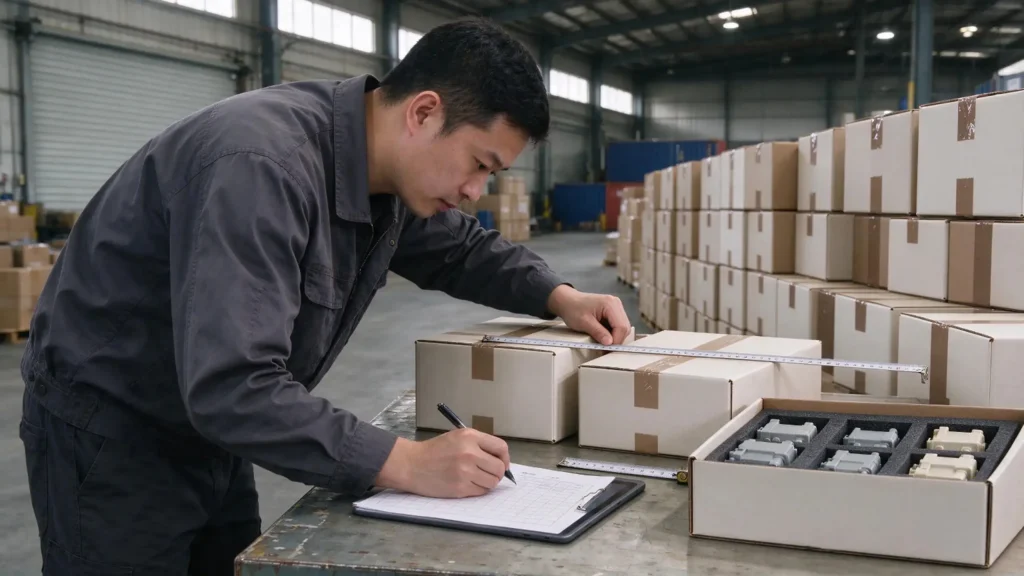
Skipping pre-shipment inspection removes a decision point while the goods are still at the supplier site. The resulting cost is not merely the defect itself: it may include destination sorting, local labor, return freight, customer claims and delayed sales. Inspection is most useful when production is complete, goods are packed and the buyer has defined what to check. It reduces uncertainty; it does not certify every unit or guarantee future performance.
Preventive action: give the inspection party the purchase order, approved specification, sample references, packaging rules and defect classifications. Agree on the sampling plan and release authority before the visit. ISO 28590:2017 introduces the ISO 2859 series for acceptance sampling by attributes, and ISO states that the 2017 edition was reviewed and confirmed in 2024.
When a report identifies nonconformity, require containment and corrective evidence, then decide whether reinspection is appropriate. WENZHOU PUPULAN INTERNATIONAL TRADE CO., LTD. coordinates pre-shipment inspection through its sourcing and export team and reports findings before release; the buyer retains the commercial release decision.
Source: International Organization for Standardization, ISO 28590:2017, verified 2026-09-26.
6. Under-budgeting duty, clearance and last-mile
The quoted unit price is only one component of landed cost. Buyers also need to assign sampling and development, tooling where applicable, export packing, origin handling, international freight, cargo insurance, duty, import taxes, customs-user fees, brokerage, examination, storage, port or terminal charges and last-mile delivery. Not every cost applies to every shipment, but leaving categories blank makes a first order look cheaper than it is.
For a U.S. import, MPF is one example of a separate customs cost. As of 2026-09-26, U.S. Customs and Border Protection states that the fiscal-year 2026 MPF for formal entries is 0.3464% of entered value, subject to a USD 33.58 minimum and USD 651.50 maximum; specific exemptions may apply. These figures are destination- and period-specific, so recheck quarterly and confirm treatment with a licensed customs broker.
Preventive action: obtain the HS code analysis, customs assumptions and destination quotation before order approval. Keep duties and taxes separate from logistics so changes remain visible. Do not copy an HS code from a similar listing without checking material, function and destination rules.
7. Buying from a vague product specification when you import from China without experience
A vague specification makes an apparently acceptable quotation impossible to compare. Words such as “premium,” “standard,” “heavy duty” or “same as sample” do not define measurable acceptance criteria. The cost appears later as quotation gaps, substitutions, inconsistent production, disputes and repeat sampling. This is one of the most common mistakes importing from China because commercial discussion moves faster than technical definition.
Preventive action: create a product-specific specification before final quotation benchmarking. Depending on the product, it may cover materials, composition, dimensions and tolerances, color reference, construction, performance, approved components, markings, packaging, labeling, testing and restricted-substance requirements. Label every revision and identify which version controls the order.
Separate four evidence levels: a buyer requirement is the target; a supplier statement is an unverified representation; a test report or inspection record is evidence within its stated scope; and shipment acceptance is the buyer’s decision. Do not treat one level as another.
8. Verifying the listing but not the legal supplier
A polished marketplace profile is not the same as verifying the legal counterparty and its operating role. The seller may be a manufacturer, trading company, brand owner, exporter or an intermediary using another entity for production and export. Any of those models can be workable if disclosed and controlled. The loss arises when the buyer contracts, pays and assigns responsibility to parties whose relationship is unclear.
Preventive action: compare the company name on the business licence, quotation, contract, bank account, export documents and test reports. Confirm the registered scope, address and relevant product experience. Where a separate factory is involved, identify who controls specifications, corrective action, inspection access and shipment release.
Ask for document copies, then independently validate key details with the issuing body or a qualified verification provider where practicable. A document image supplied by the seller is a lead for verification, not final proof.
Read the full guide here : China supplier verification
9. Allowing materials or packaging to change without control
Uncontrolled changes break the link between quotation, sample, compliance evidence and bulk goods. A substitution may appear minor yet affect performance, labeling, test applicability, duty classification or customer acceptance. The direct cost can include resampling, retesting, rework and missed launch dates. The buyer should not rely on “equivalent material” unless equivalence is defined against the approved requirements.
Preventive action: require a written change request stating the reason, affected specification clauses, old and proposed materials, commercial impact, schedule impact and required validation. Approval should come from an authorized buyer contact. Update the controlled specification and sample status after acceptance.
If / then rule: If a proposed change affects a regulated characteristic, declared material, safety function or existing test-report scope, then hold implementation until a competent compliance adviser confirms what additional evidence is needed.
10. Checking destination compliance after production
Compliance requirements should influence product design, materials, labeling, documentation and testing before the purchase order is released. Checking them after production may reveal that a mark, warning, importer detail, technical file or test scope is missing. The resulting cost can be relabeling, laboratory work, delayed clearance, refusal, recall exposure or inventory that cannot lawfully be sold.
Preventive action: identify the destination market, product category, intended user and sales channel. Assign who determines applicable requirements and who holds the supporting evidence. Verify that the tested model, materials and components match the ordered goods and that the report is current and issued by an appropriate body.
A supplier’s declaration that a product is “compliant” is not a complete compliance file. Buyers should obtain advice from a qualified product-compliance professional for the destination market, particularly for safety-critical, electrical, children’s, medical, food-contact or otherwise regulated products.
11. Reviewing shipping documents after dispatch
Document errors are cheaper to correct before dispatch than during customs clearance. Inconsistent company names, product descriptions, quantities, values, weights, package counts, HS codes or consignee details can trigger queries and delays. Required documents vary by product, destination, transport mode and payment method, so a generic “full document set” is not a reliable instruction.
Preventive action: agree a document checklist and draft-review deadline before shipment. Cross-check the commercial invoice, packing list, transport document, origin evidence and product-specific certificates or declarations as applicable. The customs broker and freight forwarder should review destination and transport requirements within their professional scope.
Treat document data as controlled order data. The same approved product description, parties and quantities should flow from contract to customs documentation unless a legitimate requirement calls for a different format.
12. Having no destination receiving plan
A shipment is not complete when it leaves China. The destination team needs advance documents, delivery contacts, unloading capability, receiving space and a process for counting and recording visible damage. Without a plan, buyers can incur failed-delivery, waiting-time, storage, redelivery and handling costs even when production and export were executed correctly.
Preventive action: confirm delivery restrictions, appointment requirements, vehicle access, unloading responsibility, equipment, operating hours and cargo dimensions with the warehouse or final site. Give the broker and receiver advance notice and define who monitors arrival, clearance and last-mile milestones.
On receipt, compare package count and visible condition with the transport record, preserve photographs and note exceptions promptly. Follow the carrier’s claim procedure and deadlines. Inspection at origin and receiving inspection serve different purposes; one does not eliminate the other.
First import from China mistakes complete guide: risk and evidence matrix
Use this matrix before approving the deposit, production start, balance payment and shipment release. A blank evidence cell is a control gap, not proof that the order will fail.
| Mistake | Likely cost mechanism | Minimum control evidence |
|---|---|---|
| No sample sign-off | Rework, sorting, unusable inventory | Approved sample ID and controlled specification |
| Personal or changed beneficiary | Payment loss and recovery expense | Independently verified beneficiary chain |
| Verbal lead time | Expediting, missed launch, storage | Milestone schedule with owners and evidence |
| Vague Incoterm | Unplanned logistics charges and risk | Rule, named place and Incoterms® 2020 |
| No pre-shipment inspection | Destination sorting, claims, delay | Inspection scope, report and release decision |
| Incomplete landed-cost model | Margin erosion and cash shortfall | Broker and forwarder assumptions by cost line |
| Late compliance review | Retesting, relabeling, blocked sale | Market-specific requirement and evidence list |
| No receiving plan | Waiting, storage and redelivery | Confirmed appointment, access and unloading plan |
How to calculate the cost of each first-order mistake
A first-order loss is easier to prevent when the buyer connects it to a measurable cost line. Use these formulas as a planning framework, then replace each input with a quotation or destination-specific professional estimate. They do not create a universal percentage and do not replace advice from a customs broker, freight forwarder, insurer or product-compliance adviser.
| Risk event | Planning formula | Evidence to request |
|---|---|---|
| Sample or specification failure | Affected units × landed unit cost + rework + retest | Approved sample, revision log and inspection findings |
| Late production milestone | Extra days × storage or expedite rate + launch impact | Milestone schedule, owner and dated status proof |
| Unplanned import charges | Duty + tax + customs fee + brokerage + handling + delivery | HS-code rationale and broker or forwarder quote |
| Payment or beneficiary error | Transferred amount + bank recovery + legal or admin cost | Verified legal entity, contract and beneficiary chain |
| Destination rejection or relabeling | Retest + relabel + storage + return or disposal exposure | Market requirement, test scope and label approval |
If a specification error affects only part of a shipment, calculate those units separately instead of applying the entire order value. If the issue delays delivery, add logistics and commercial effects as separate lines. This makes assumptions visible and gives the buyer a defensible reason to pause, renegotiate or approve the next stage.
Real limitation: this checklist is a control framework, not a universal cost forecast.
It applies to professional buyers planning a first commercial order and helps expose missing decisions. It is not a substitute for destination-specific legal, tax, customs, product-safety, insurance or logistics advice. The correct evidence depends on the product, market, value, transport mode and buyer’s contract. Regulated or safety-critical goods require specialist review before production.
Read the full guide here : assessing the risks of importing from China
Frequently Asked Questions: first import from China mistakes for first-time importers
First import from China mistakes: what mistakes do first-time importers from China make?
First-time importers most often lose control by ordering without an approved sample, paying an unverified beneficiary, accepting a verbal schedule, using an incomplete Incoterm and omitting inspection or landed-cost lines. The exact risk varies by product and destination. A 12-point evidence checklist should be completed before the T/T deposit, production release and shipment approval.
why did my first China order cost more than quoted
Your first China order probably cost more because the quotation did not include every landed-cost component. Depending on the Incoterms rule, product and destination, freight, insurance, duty, taxes, MPF, brokerage, examination, storage and last-mile delivery may sit outside the unit price. Rebuild the estimate with a customs broker and freight forwarder before approving the order.
how do I avoid losing money on my first China order
Use staged approval gates instead of relying on one supplier promise. Verify the legal supplier and bank beneficiary, approve the sample and specification, document milestones, confirm Incoterms® 2020, review compliance, inspect before release and validate shipping documents. If required evidence is missing, pause the next payment or shipment decision until the responsible party resolves the gap.
how much should I budget for my first import
Budget from landed cost, not from the supplier’s unit price, and do not apply a universal percentage. Include product, development, tooling where applicable, packing, origin charges, freight, insurance, duty, import taxes, customs fees, brokerage, possible examination or storage, and last-mile delivery. Obtain destination-specific estimates using the proposed HS code, shipment value, Incoterms and transport mode.
is it safe to buy from China for a first commercial order?
It can be commercially manageable when identity, specifications, payment, compliance, quality and logistics are controlled with evidence. Country of origin alone does not determine transaction safety. Verify the legal counterparty, match the beneficiary, use written approvals and keep release authority tied to milestones. Product and destination risks still require qualified customs and compliance advice.
Turn the 12 risks into approval gates
Use the first-order decision worksheet to assign evidence, ownership and stop/go decisions before your deposit, production release and shipment approval.
Request the first-order decision worksheetJayden, Founder of PUPULAN
PUPULAN is a sourcing and export service company based in Wenzhou, China. Its work covers supplier development and verification, quotation benchmarking, sampling coordination, order follow-up and milestone tracking, pre-shipment inspection coordination, mixed-container consolidation, export documentation and customs handling, and DDP door-to-door delivery.